





 Empty Cart


Recent Posts
-
 School-Enterprise Collaboration | Industrial Design Students and Faculty from Zhijiang College Visit Threadify
-
 School-Enterprise Collaboration | Students and Faculty from Zhijiang College Visit Threadify
-
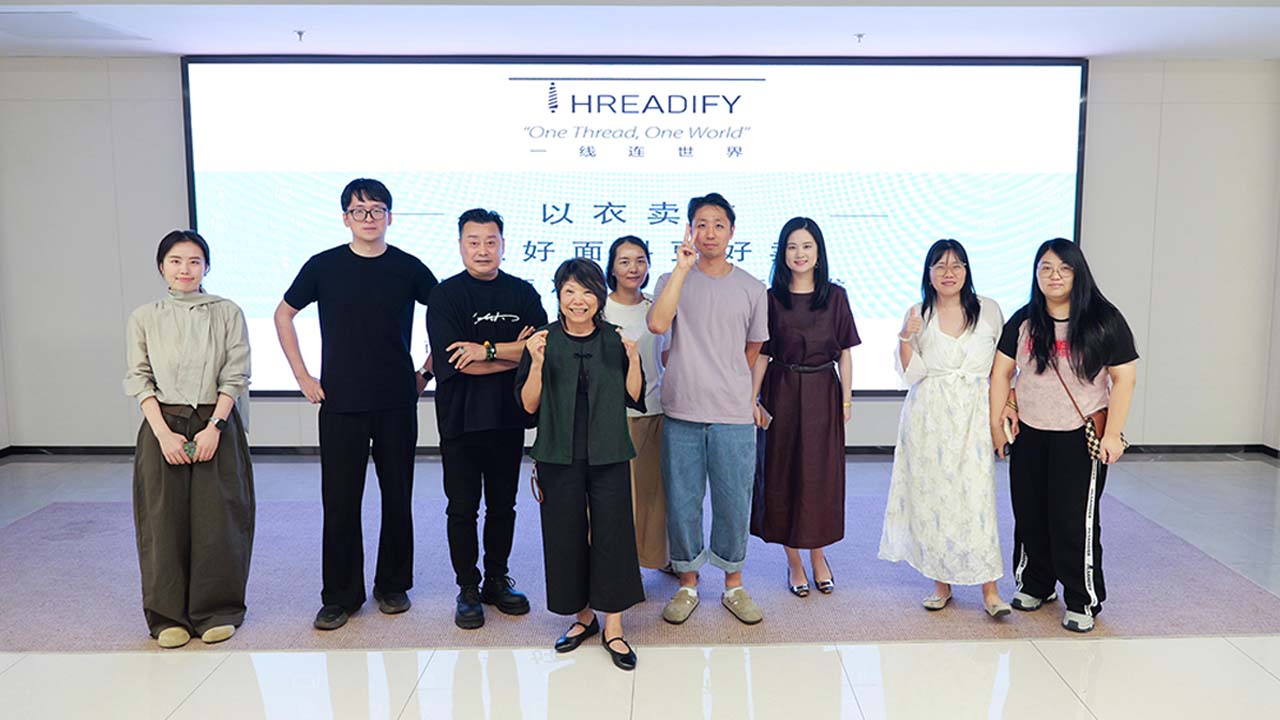 “Sell Fabric Through Garments, Make Good Fabric Sell Better” | Fabric Supplier Event Wraps Up
-
 Threadify Presents "Sell Fabric Through Garments" Free Workshop for Suppliers
-
 Threadify’s "From Design to Market" Apparel Brand Incubation Program Launched in Collaboration with Dongguan
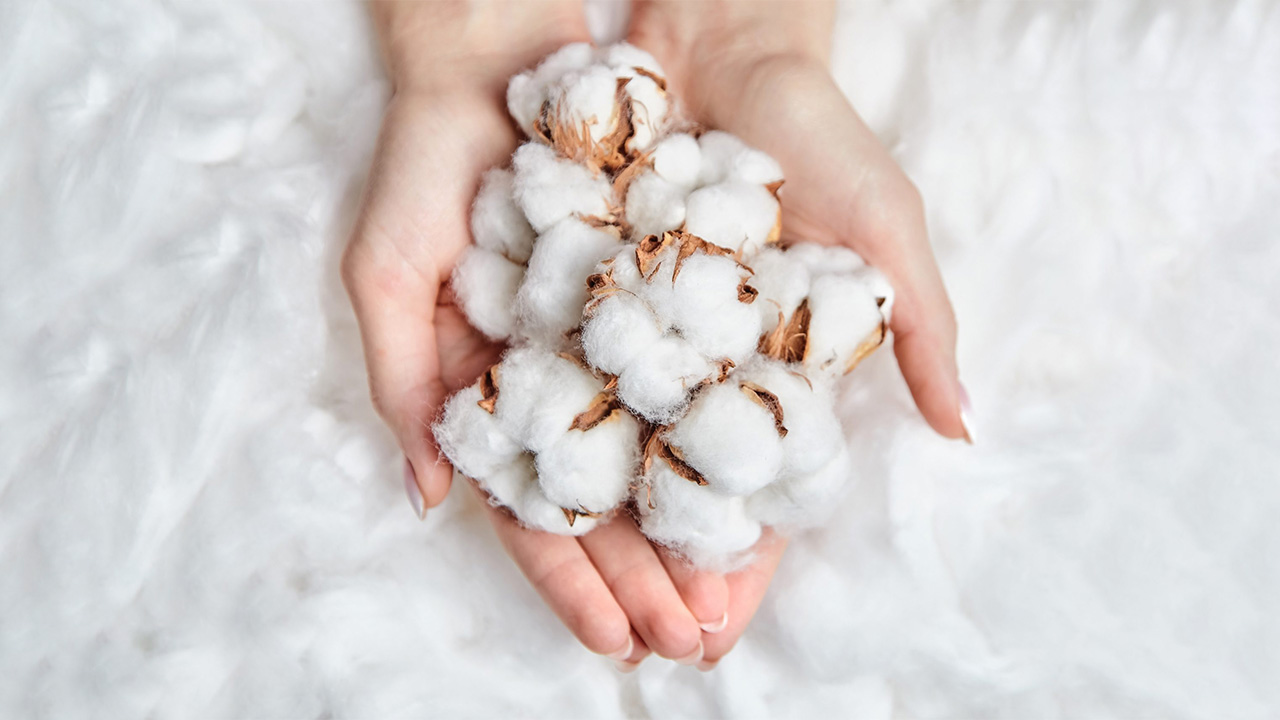
Understanding Cotton Yarn: Conventional Cotton vs. BCI Cotton vs. Organic Cotton Yarn
Cotton yarn is the backbone of the global textile industry—valued for its softness, breathability, versatility, and sustainability potential. From everyday basics to premium fashion, the type of cotton yarn used plays a critical role in quality, cost, and environmental impact.
In this guide, we break down conventional cotton, BCI cotton and organic cotton yarn, explain key industry terms, and answer the most searched questions buyers and brands ask today.
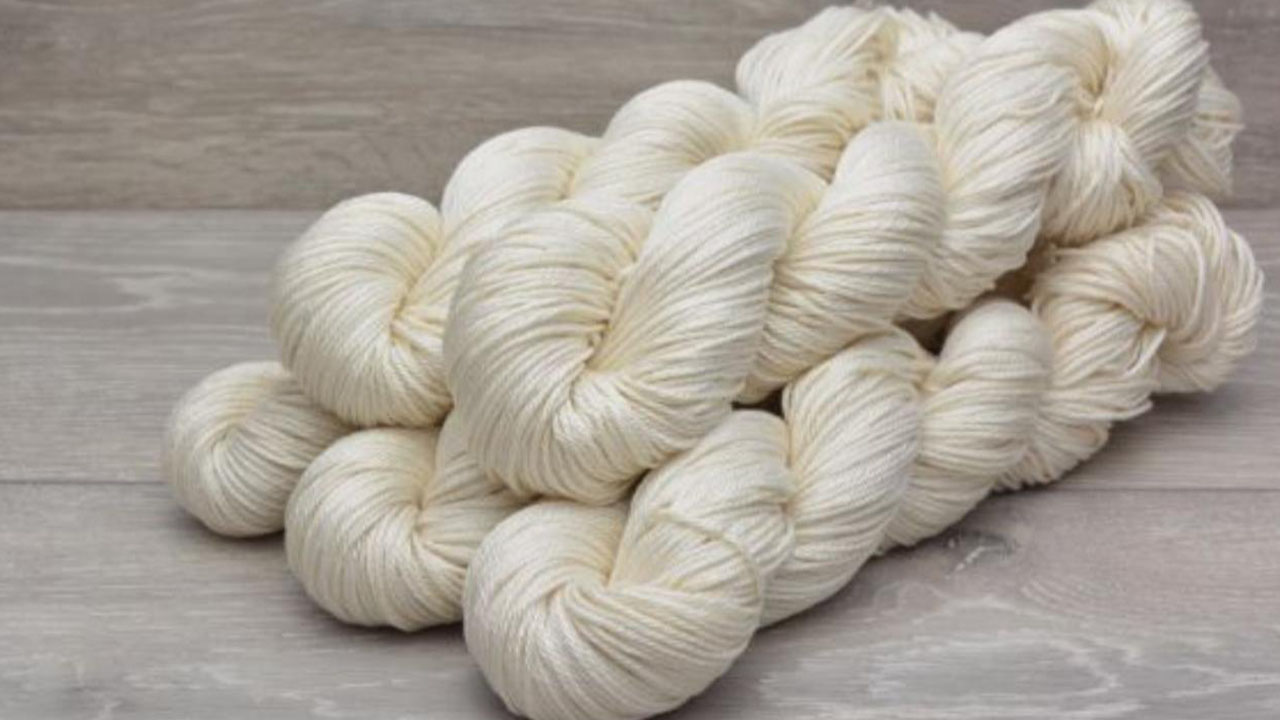
What Is Cotton Yarn?
Cotton yarn is a continuous strand of fibers spun from natural cotton. It is widely used in knitting, weaving, and sewing to create fabrics for apparel, home textiles, and industrial applications.
What Is Cotton Yarn Used For?
- T-shirts, shirts, denim, underwear
- Knitwear and sweaters
- Towels, bed sheets, and home textiles
- Babywear and medical textiles
Naturally sourced cotton yarn is prized for its softness, breathability, and skin-friendly feel. These benefits are most pronounced in 100% cotton yarn, meaning it contains only pure cotton fibers with no synthetic or blended materials. That said, not all cotton is created equal—the way it is grown and processed plays a major role in its quality and environmental impact. This is where the differences between conventional, BCI, and organic cotton yarn become important.
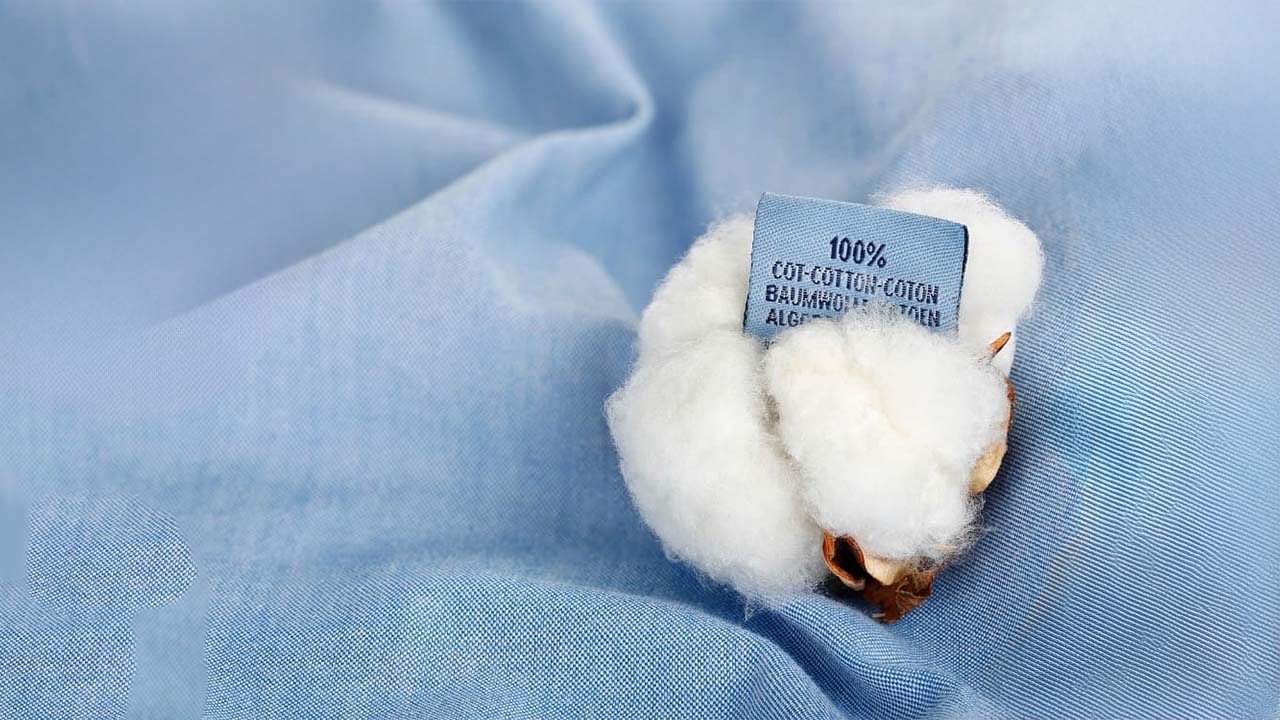
Conventional Cotton vs. BCI Cotton vs. Organic Cotton Yarn
What is Conventional Cotton Yarn?
Conventional cotton is grown using traditional farming methods that often involve:
- High water consumption
- Chemical pesticides and fertilizers
- Intensive soil usage
While conventional cotton yarn is widely available and cost-effective, it has a larger environmental footprint compared to alternative cotton types.
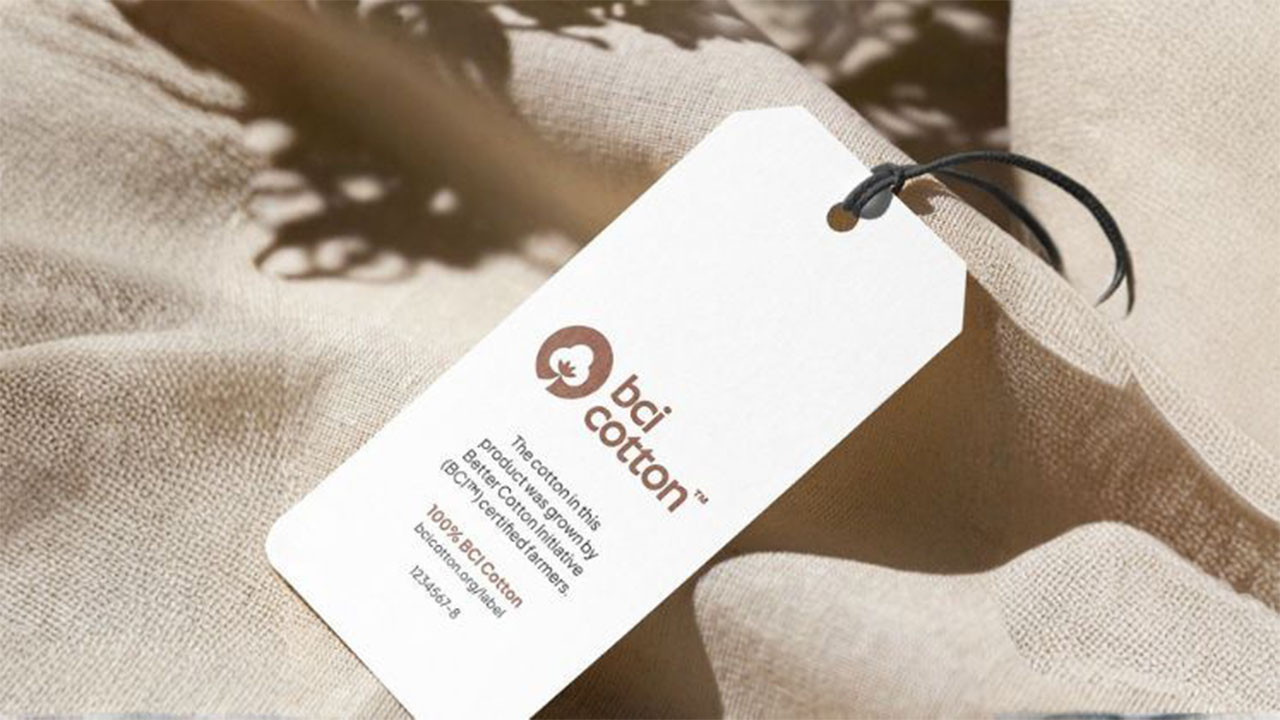
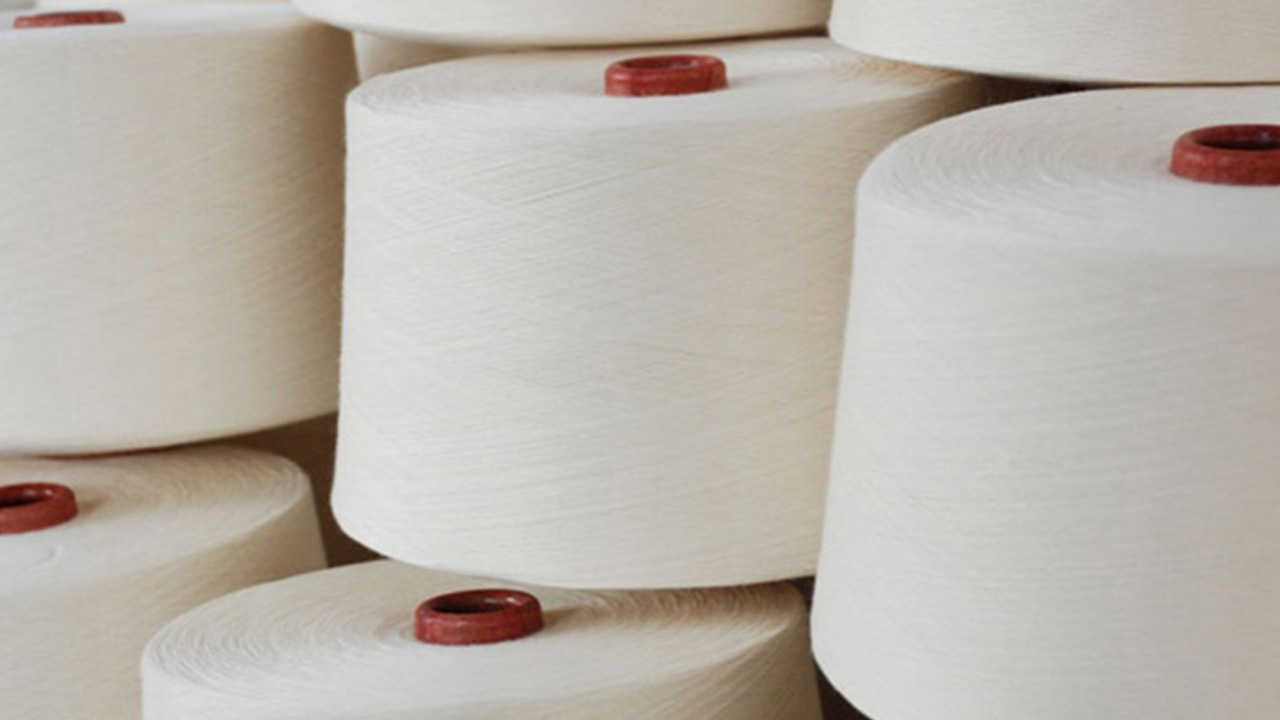
What Is BCI Cotton Yarn?
BCI cotton full form is Better Cotton Initiative. Cotton grown under this program follows improved sustainability standards while remaining non-organic. When a product is labeled 100% BCI cotton yarn, it indicates that the cotton comes entirely from BCI-licensed farmers, contributing to:
- Reduced water usage
- Better soil health
- Safer chemical use
- Improved farmer livelihoods
BCI cotton yarn follows a mass balance system, ensuring better cotton farming is supported at scale.
What Is Organic Cotton Yarn?
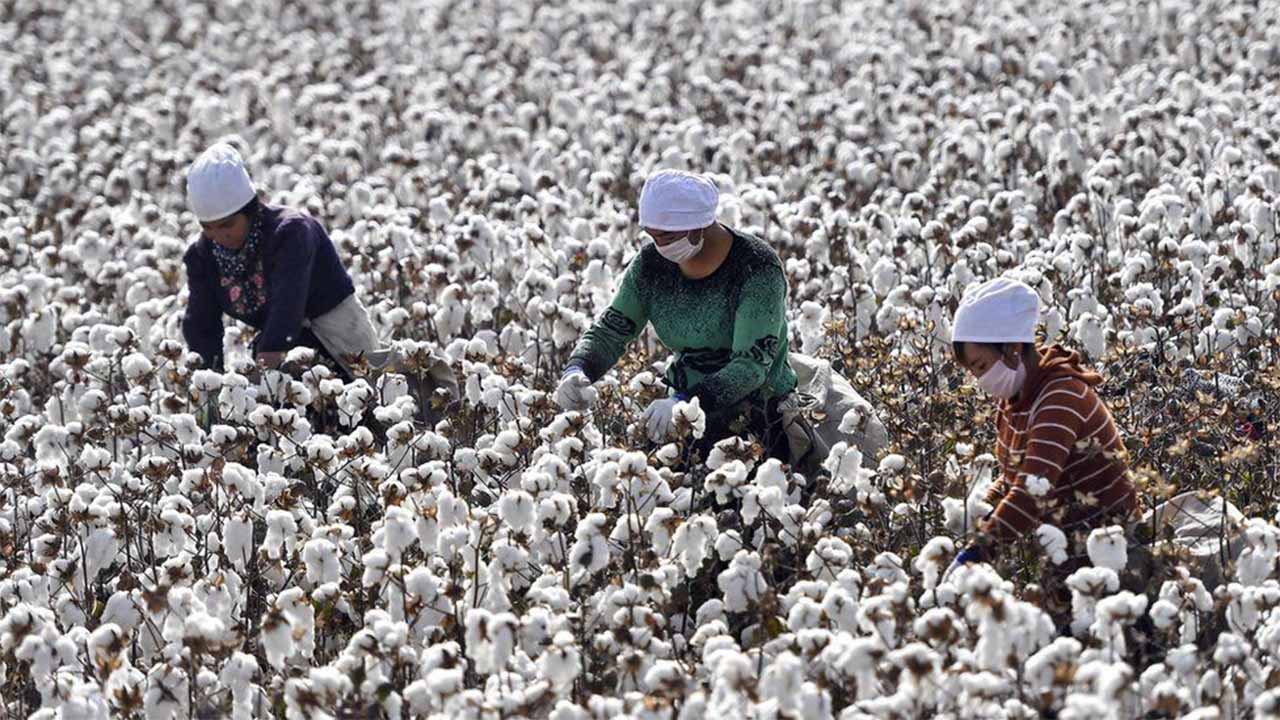
Organic cotton meaning is cotton grown without synthetic pesticides, fertilizers, or genetically modified seeds, following strict environmental and social standards.
What Is Organic Cotton Made Of?
Organic cotton is made of naturally grown cotton fibers, cultivated using eco-friendly farming practices that protect soil health, biodiversity, and farmer well-being.
How Is Organic Cotton Made?
- Grown from non-GMO seeds
- Uses natural pest control methods
- Relies on rain-fed or optimized irrigation
- Processed without harmful chemicals
GOTS Certified Organic Cotton
GOTS (Global Organic Textile Standard) is the world’s leading certification for organic textiles.
What GOTS Certification Ensures?
- Minimum 70% certified organic fibers (95% for “organic” label)
- Environmentally responsible processing
- Ethical labor standards across the supply chain
- Full traceability from farm to finished product
For brands seeking credibility and transparency, GOTS certified organic cotton yarn is the gold standard.
Cotton Yarn Count Formula
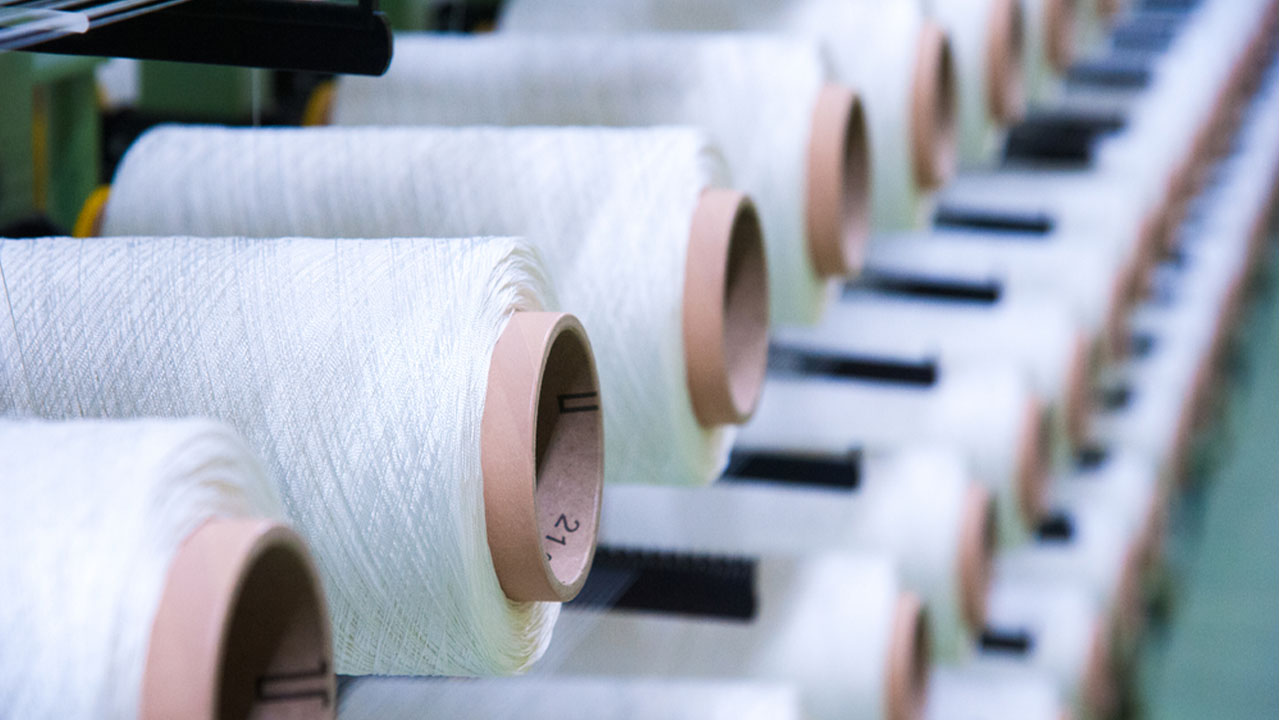
Cotton yarn count indicates the thickness or fineness of a yarn, the higher the count, the finer the yarn. Choosing the right yarn count is crucial, as it directly affects fabric texture, strength, drape, and end-use performance.
To find yarn count hassle-free without using cotton yarn count formula, use Threadify’s Yarn Count Converter Calculator, which allows you to easily convert between different yarn count systems with accuracy.
Which Cotton Yarn is Better?
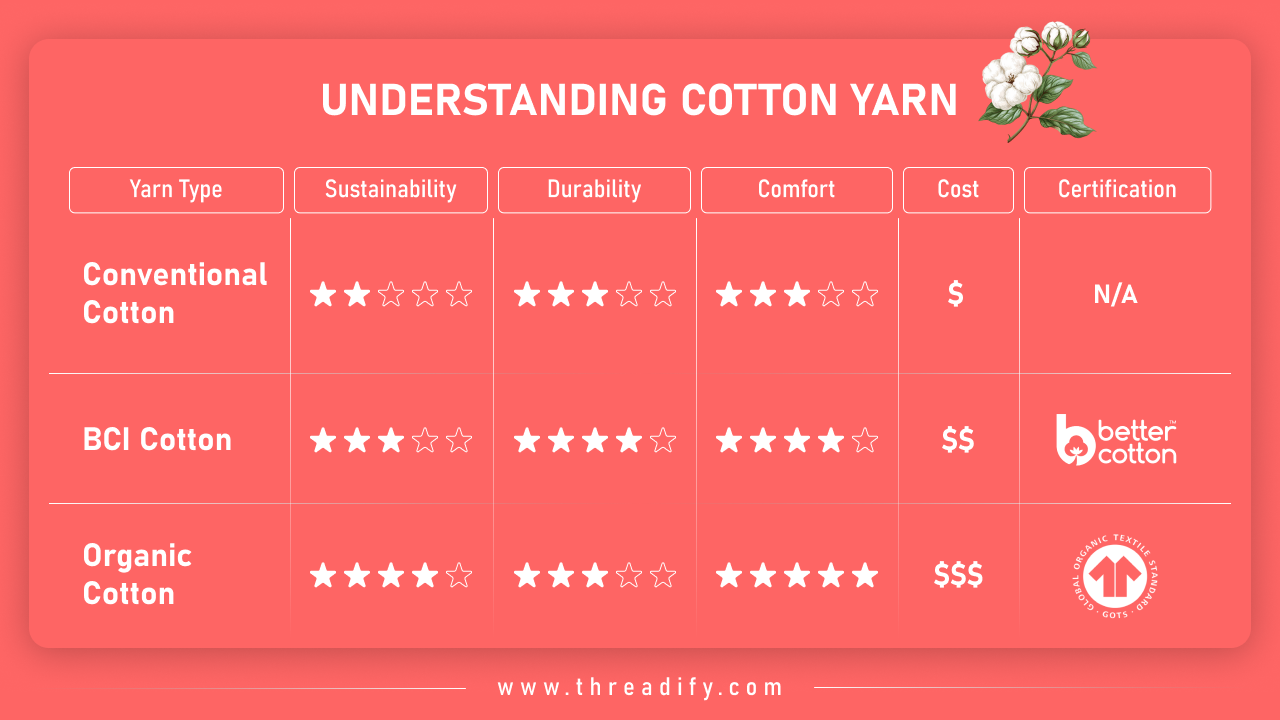
Choosing between conventional, BCI, and organic cotton yarn ultimately depends on your priorities around sustainability, durability, comfort, and cost. Each option offers distinct advantages. Conventional cotton yarn is well suited for cost-sensitive, high-volume production. BCI cotton yarn is an ideal choice for brands looking to enhance sustainability while preserving scalability and cost efficiency. For those seeking maximum transparency and verified sustainability, GOTS-certified organic cotton can be the preferred option.
Final Thoughts
As the fashion and textile industry moves toward responsible sourcing, understanding cotton yarn types is no longer optional, it’s essential. Whether you choose conventional cotton, BCI cotton yarn, or GOTS-certified organic cotton, informed decisions create better products, stronger supply chains, and a more sustainable future.
Threadify is here to help brands navigate cotton sourcing with clarity, confidence, and transparency.

Author Azmol Hossen Bappi
Sr. Merchandiser
Dynamic and highly experienced Senior Merchandising Professional with a proven 9-year track record of delivering value to global retailers, fashion brands, designers, and suppliers. He’s recognized for seamlessly bridging creative vision with commercial execution, specializing in managing the complete product lifecycle.