





 Empty Cart


Recent Posts
-
 Threadify Presents "Sell Fabric Through Garments" Free Workshop for Suppliers
-
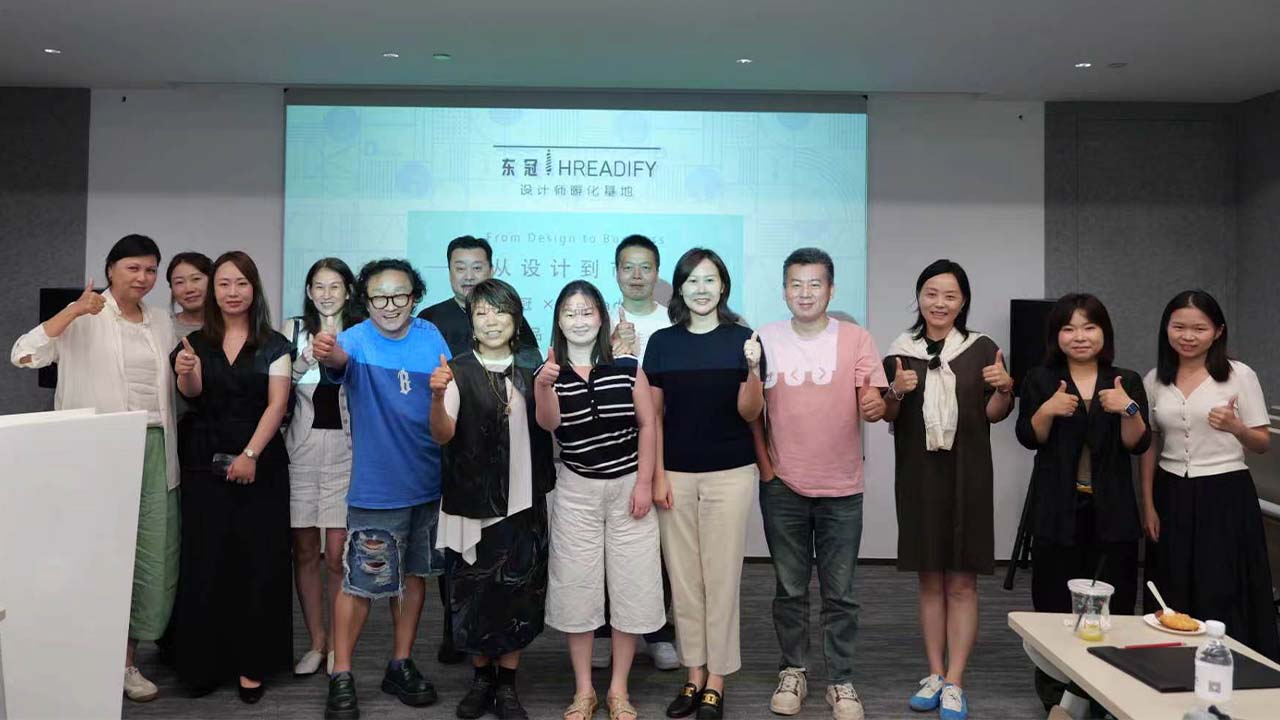 Threadify’s "From Design to Market" Apparel Brand Incubation Program Launched in Collaboration with Dongguan
-
 Threadify x Dongguan: A New Apparel Brand Incubator Launches in Hangzhou
-
 China's Textile and Apparel Exports Reach $146 Billion in H1 2026
-
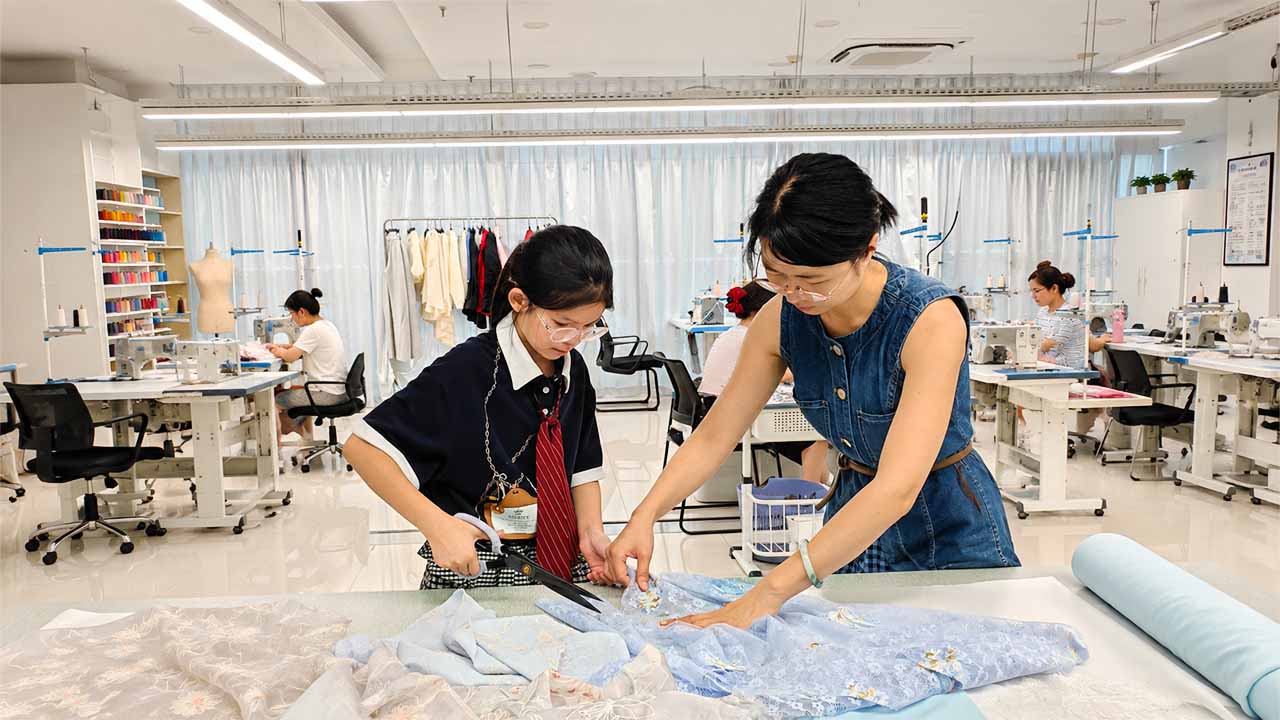 Parent-Child Craft Workshop: Families Create Patchwork Bags at Threadify Fashion Complex
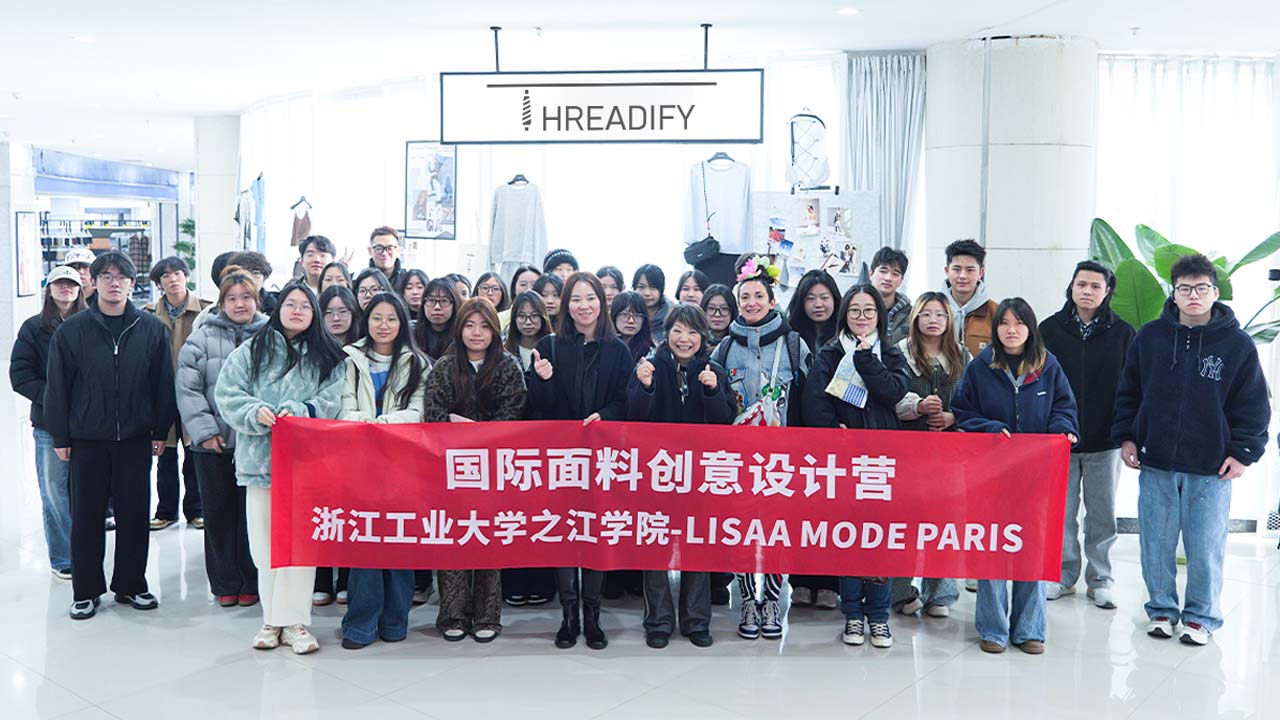
Zhejiang University Students Visit Threadify to Experience the Fashion Supply Chain
On the morning of March 10, third-year students majoring in Fashion and Apparel Design from Zhejiang University visited Threadify, accompanied by three faculty members. The visit offered students a valuable opportunity to experience the fashion industry supply chain firsthand—from fabric sourcing to finished garments.
Guided by Threadify’s Design Director Professor Cai throughout the tour, the students explored our integrated ecosystem and gained practical insights into fabric trends, design development, and modern apparel production processes.
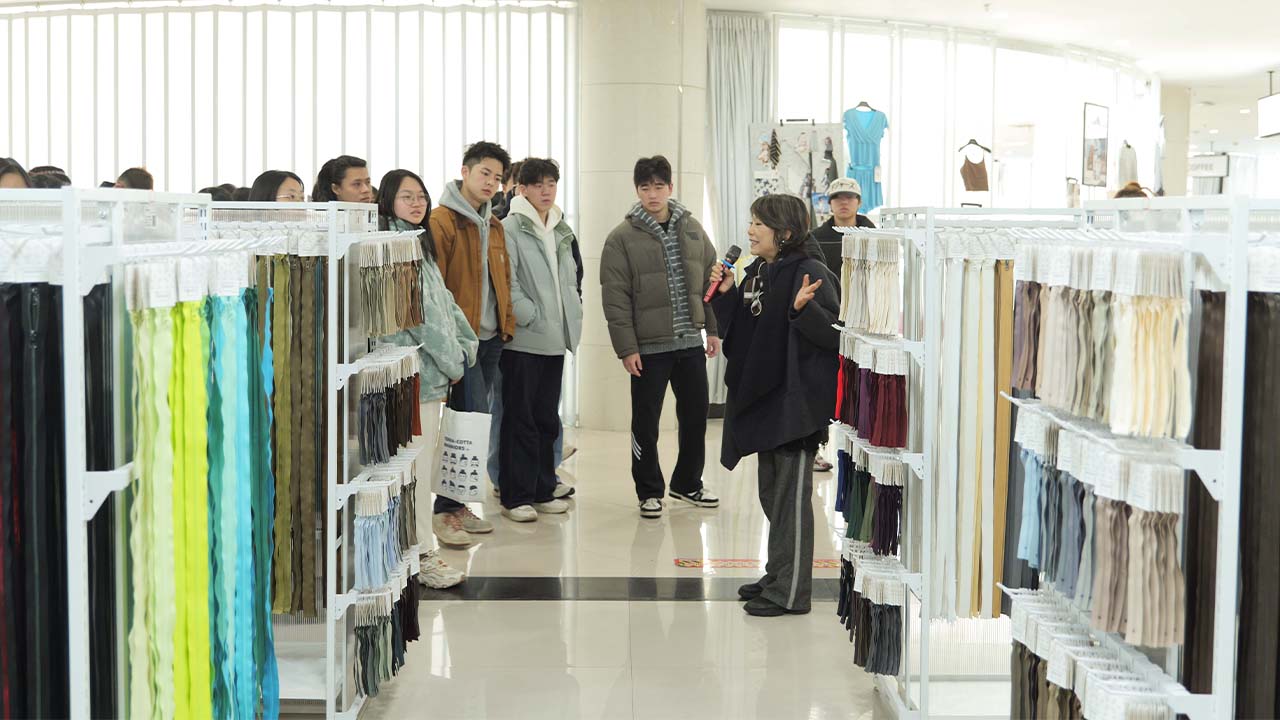
A New Approach to Fabric Sourcing
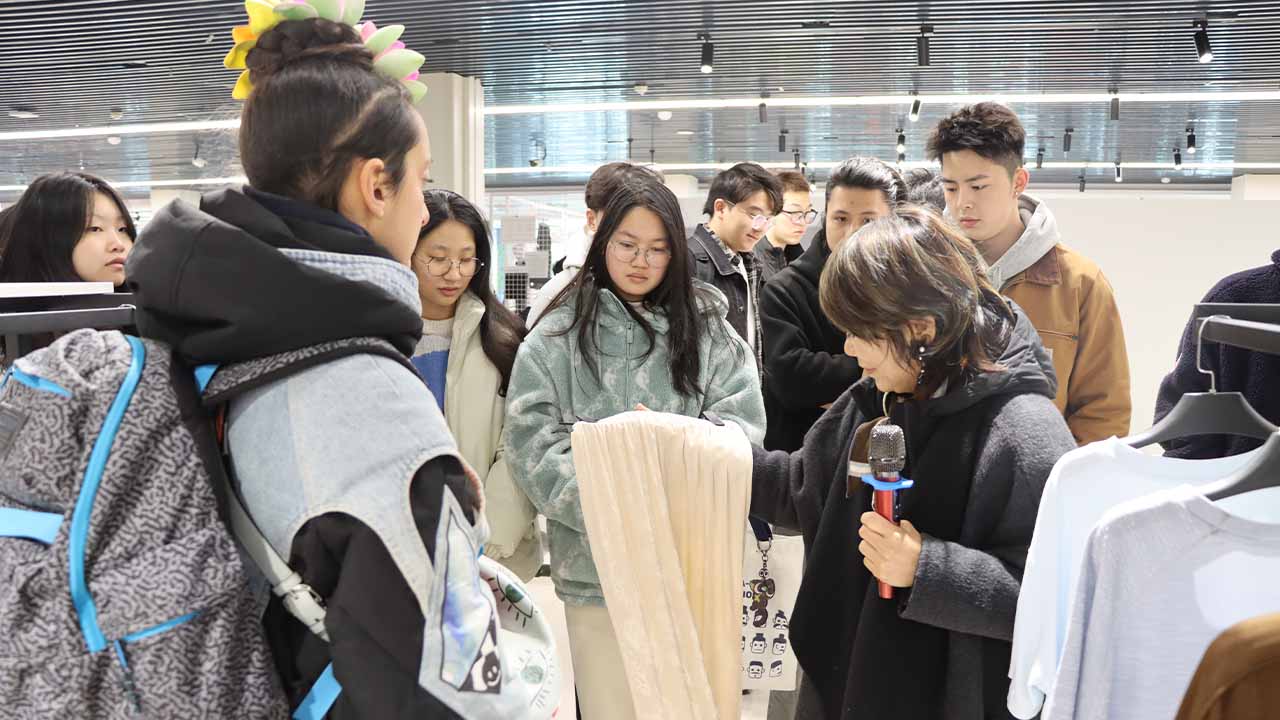
The visit began at Threadify’s Fashion Complex, where Professor Cai introduced the concept behind the space. Unlike traditional fabric markets that separate materials by category—such as knitwear on one floor and woven fabrics on another—Threadify organizes its materials in a department store-style layout.
This innovative setup allows designers to explore knit fabrics, woven textiles, and functional materials all in one place, enabling faster material selection and more efficient scenario-based matching. The model significantly reduces the time and effort designers typically spend searching across multiple locations for the right materials.
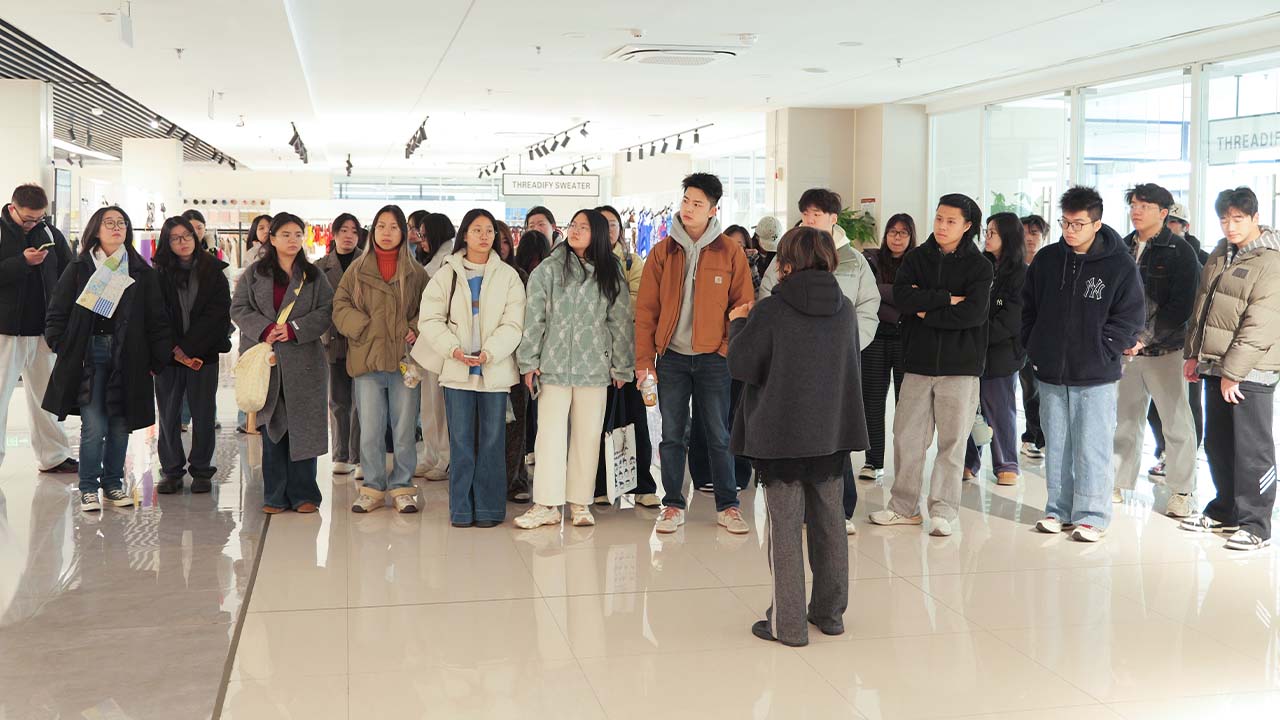
From Fabric to Style: A New Way of Showcasing Materials
During the tour, Professor Cai also highlighted a growing trend in the fabric industry—presenting fabrics through finished garments rather than simple swatches.
Instead of displaying fabric samples alone, many suppliers now transform fabrics into actual garments and showcase them in display areas. When buyers see a garment they like, they naturally inquire about the fabric used. This approach provides a more intuitive and engaging way to demonstrate fabric possibilities and has quickly become a mainstream marketing method within the industry.

Bridging Design Inspiration and Production
The group then visited Threadify’s designer co-working space, where the first highlight was the Fall/Winter 2026 collection originally presented at Keqiao Fashion Week in 2025.
The workspace is organized into themed zones representing different lifestyle scenarios, including yoga, outdoor sports, home leisure, outerwear, and sweaters. Thousands of sample garments are displayed throughout the space, creating a rich three-dimensional source of inspiration for designers.
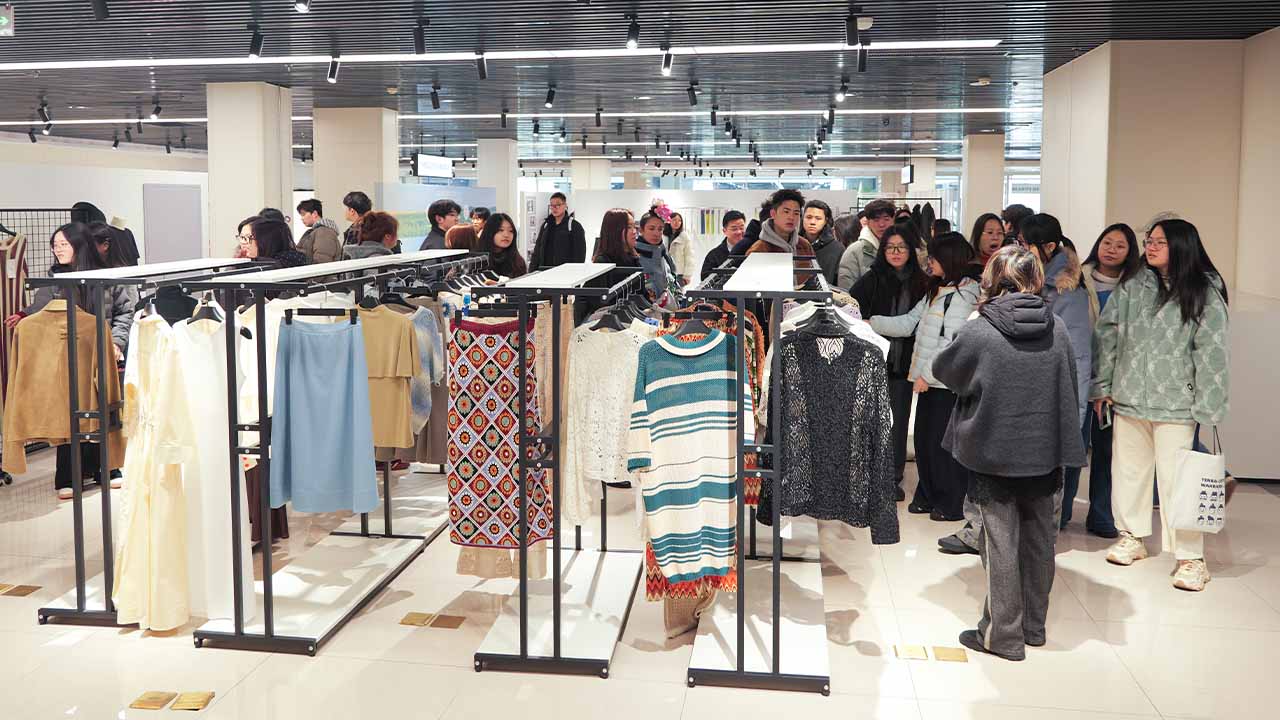
Professor Cai explained that these garments are more than visual displays—they serve as essential communication tools. Physical samples help designers clearly explain pattern adjustments to pattern makers, improving communication efficiency and reducing trial-and-error during the sampling process.

From Design Concept to Finished Garment
The final stop of the tour was the central sample-making facility, where students observed the journey from design sketches to completed garments. The visit provided an inside look at how ideas evolve into tangible products through coordinated design, sampling, and production processes.
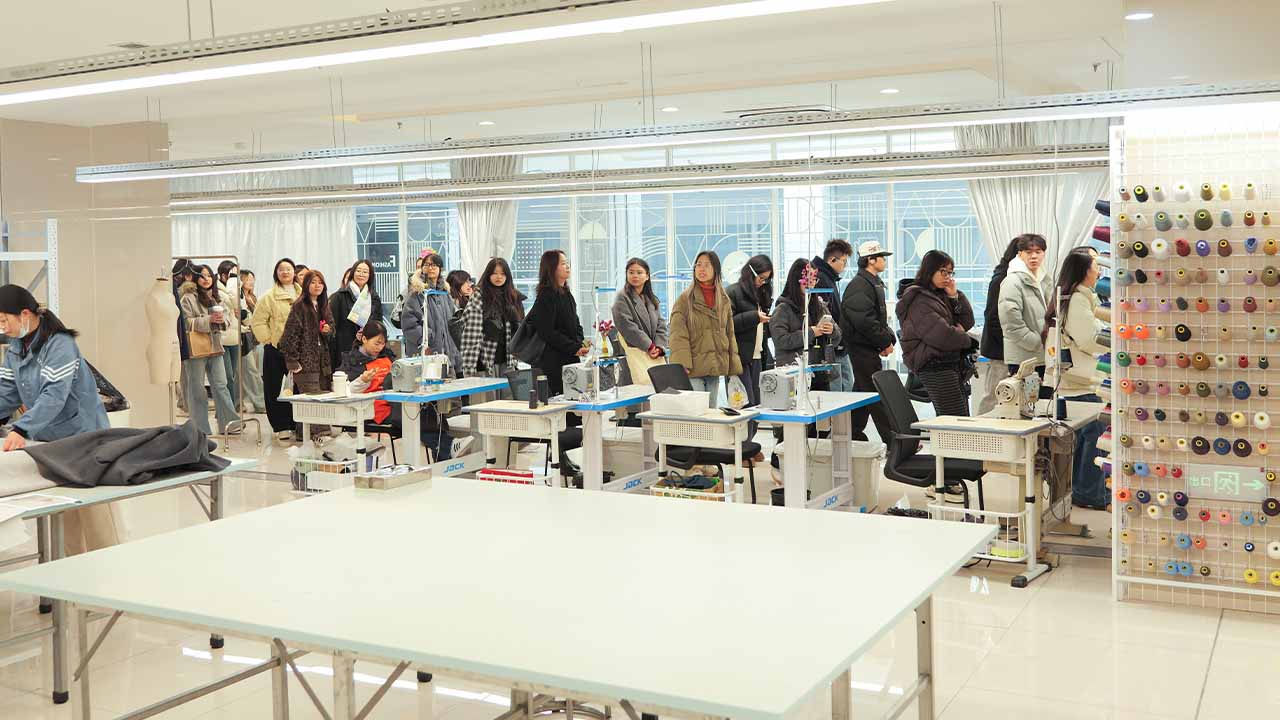
Understanding Future Fabric Trends
Following the tour, Professor Cai presented key insights into the upcoming Autumn/Winter 2026–27 fabric trends.
Classic materials such as suede, leather, tweed, and fleece are making a strong comeback, while timeless patterns like leopard print and retro plaid continue to remain popular. Meanwhile, the design possibilities of down jackets are expanding through creative fabric combinations, including corduroy and knitted sweater textures.
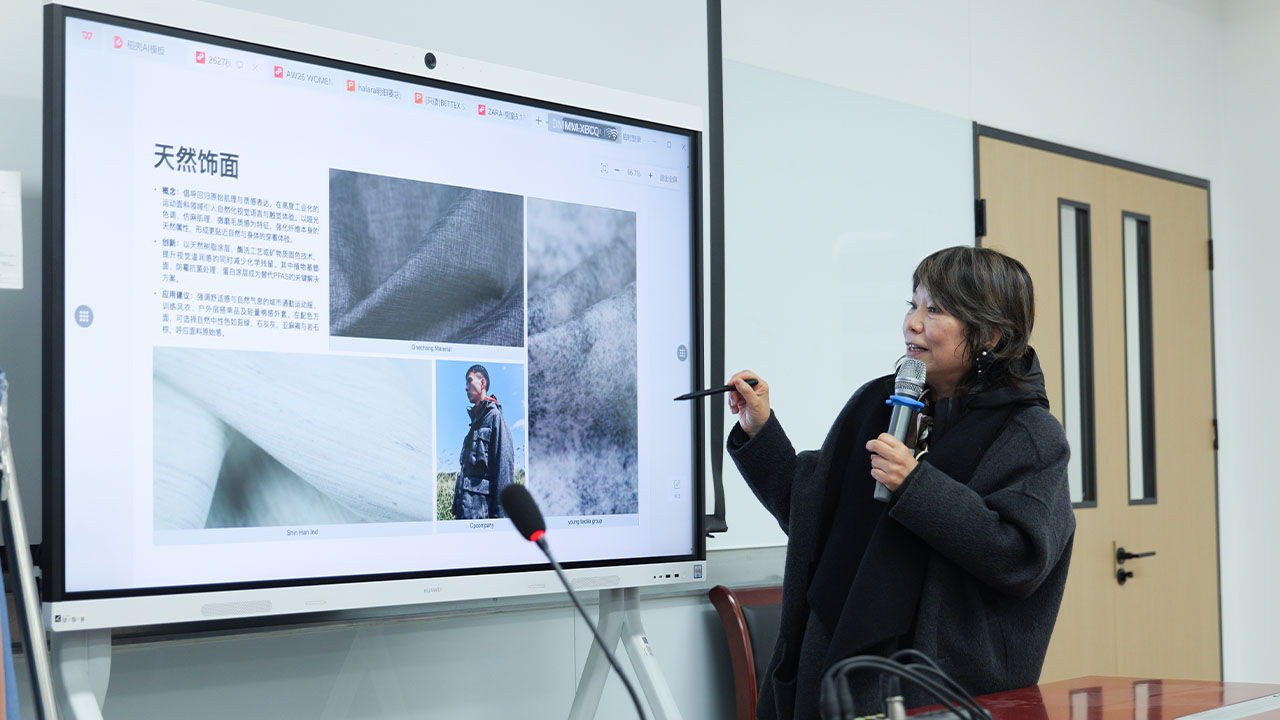
Functional outdoor fabrics are also evolving rapidly. In addition to performance features such as quick-drying, windproof, and waterproof capabilities, these materials increasingly incorporate sustainable elements like recycled nylon—reflecting the industry's growing commitment to environmental responsibility.
Real-World Design Insights
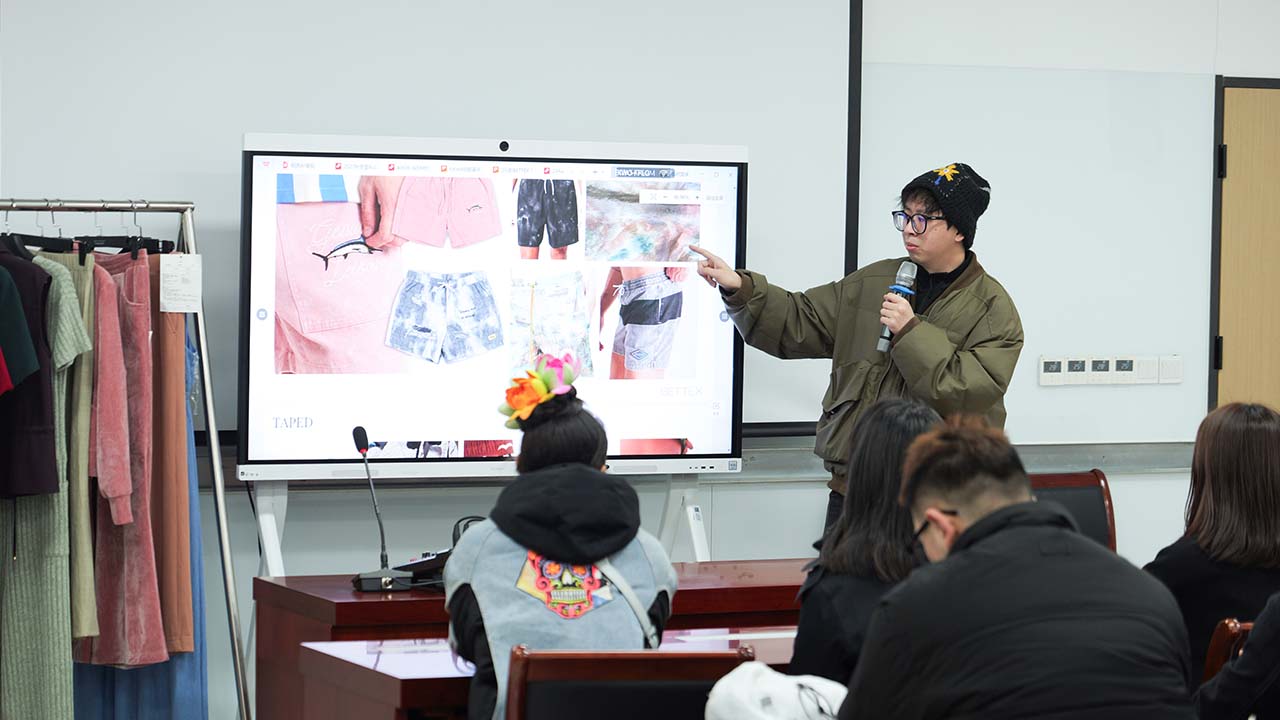
Threadify designer Wanli concluded the session with a practical case study illustrating the full journey from trend inspiration to final design.
Using a boys’ swimwear collection developed for an international brand as an example, Wanli demonstrated how designers begin with a few reference images from clients, analyze key visual elements such as marine themes, patterns, and textures, and then utilize AI tools to rapidly generate pattern concepts and complete the original design.
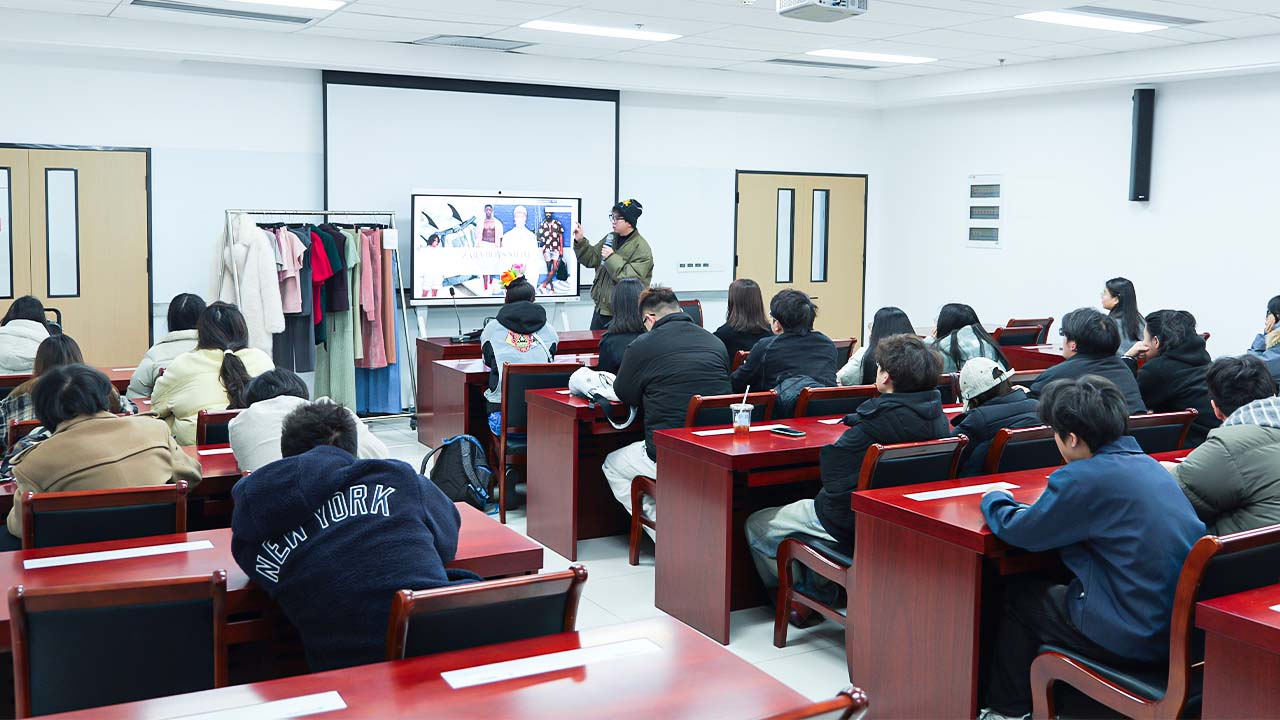
He also emphasized the importance of the “rapid response” model in cross-border e-commerce. According to Wanli, successful designers must go beyond aesthetics—they must also understand production costs and supply chain dynamics in order to bring their ideas to market effectively.
Inspiring the Next Generation of Designers
The two-hour visit provided Zhejiang University’s students and faculty with a clear and practical view of how the fashion supply chain operates—from material sourcing to final production and market delivery.
Looking ahead, Threadify will continue to open its doors to universities and design institutions, offering more students opportunities to engage directly with the industry and help cultivate the next generation of fashion design talent.